Tall Cat Tree for Large Cats: Hammock, Condo & Posts
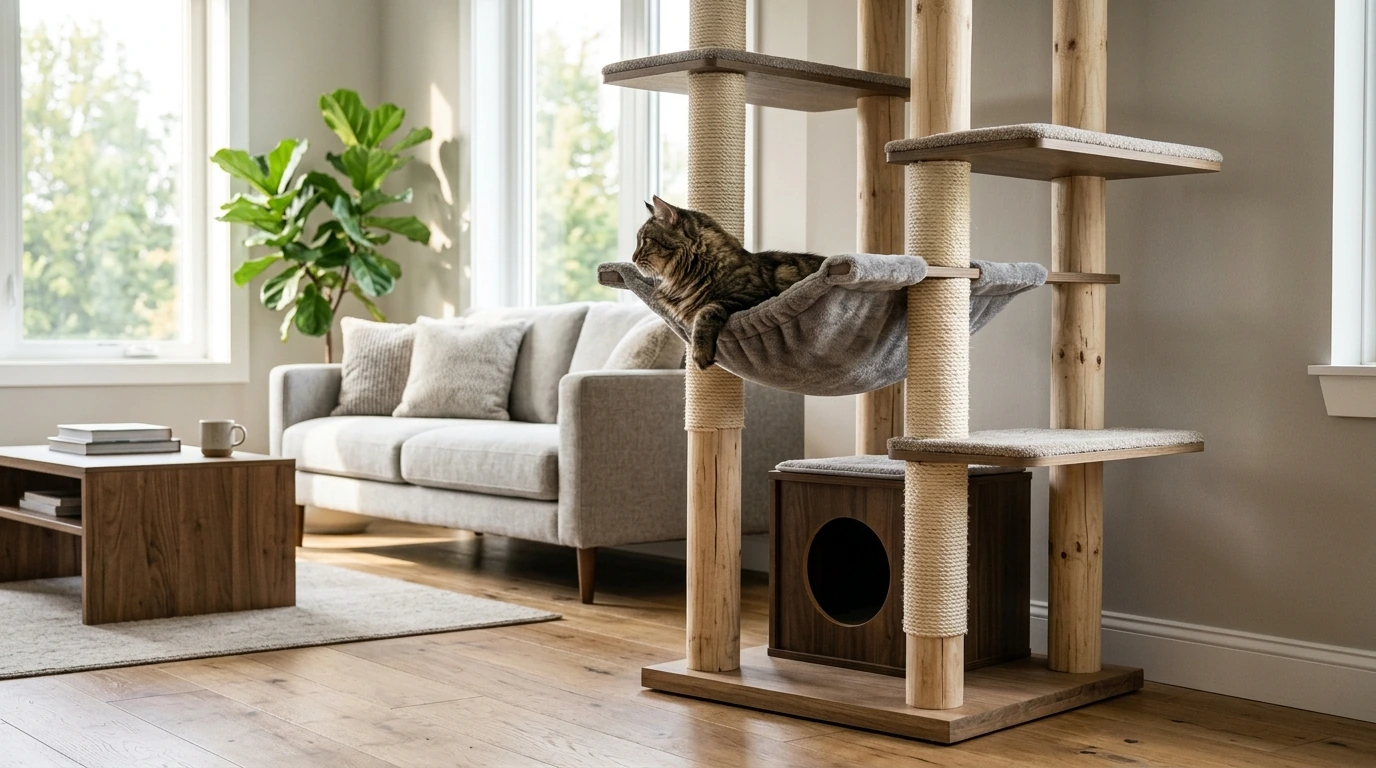
Tall Cat Tree with Hammock, Scratching Posts, and Condo: A Comfort-First Tower for Confident Climbers
Cats that love to climb, lounge, and scratch need a setup that feels stable underfoot and inviting at every level. This tall cat tree combines a roomy hammock, multiple scratching posts, and a covered condo to support active play, daily nail care, and quiet naps—especially for bigger cats that prefer wider platforms and sturdier support. The result is a vertical “home base” that supports natural feline routines while keeping your living space organized.
What Makes This Tower Different for Larger Cats
- Built around comfort zones: an open hammock for draping plus a condo for enclosed rest, so cats can choose the mood they want.
- Multiple scratching surfaces: encourages daily claw maintenance and helps keep scratching directed away from furniture.
- Vertical layout, smaller footprint: supports climbing and lookout behavior without needing extra floor space.
- Designed to feel steady: a well-balanced tower matters when a heavier cat jumps up, pivots, or hops down quickly.
- Better flow for multi-cat homes: separate “stations” (hideaway vs. hammock vs. posts) can reduce crowding and friction.
Feature Breakdown: Hammock, Condo, Platforms, and Posts
- Large hammock: ideal for cats that like to curl, sprawl, or hang paws over the edge. A hammock-style cradle also gives a gentle “hug” effect many cats find calming.
- Covered condo: offers privacy for timid cats, frequent nappers, or cats that need a quiet decompression spot when the house gets busy.
- Scratching posts: supports the natural urge to scratch after waking and after play, when cats often feel the strongest need to dig in and stretch.
- Elevated perches: encourages window-watching and gives cats a way to survey the room from above—an environment feature many cats seek out.
- A natural sequence: the layout encourages climb → scratch → perch → nap, which mirrors how many cats move through energy and rest cycles.
For more on why cats benefit from enriched spaces that include vertical territory and resting variety, see the American Association of Feline Practitioners (AAFP) environmental needs guidelines.
Sizing and Placement Tips That Improve Daily Use
- Set it near a window when possible: elevated viewing can increase daily engagement and reduce boredom behaviors.
- Start with a flat, stable surface: place the base on solid flooring; thick plush rugs can create wobble if they compress unevenly.
- Use a wall to your advantage: for jump-happy cats, positioning near a wall can reduce side-to-side sway and make the climb feel more secure.
- Keep the “landing zone” clear: leave space around the base so cats can approach from multiple angles without feeling trapped.
- Introduce gently for nervous cats: begin with treats in the condo and on the first platform so the tower becomes a reliable source of good things.
Comparing Comfort Zones: Open Lounging vs. Hidden Rest
Even confident cats rotate through different rest styles depending on temperature, household activity, and time of day. Having both an open hammock and a covered condo helps match those shifting preferences without forcing a cat to compromise.
- Hammocks tend to attract cats that run warm, like flexible support, or prefer a cradled nap with limbs draped comfortably.
- Condos appeal to cats that prefer covered naps, especially in busy homes with foot traffic and noise.
- Many cats use both—an open perch during quiet daylight hours, then the condo when things get lively.
- Multi-cat bonus: offering both options can reduce competition and “resource guarding” around prime sleep spots.
Which Space Cats Use Most (Common Patterns)
| Cat Preference | Likely Favorite Spot | Why It Works | Tip to Encourage Use |
|---|---|---|---|
| Sprawling sleeper | Large hammock | Flexible cradle supports curled or stretched naps | Add a thin, washable pad if your cat likes extra cushion |
| Shy or easily startled | Covered condo | Enclosure lowers stress and blocks visual clutter | Place a familiar blanket inside for quicker acceptance |
| High-energy climber | Top platform/perch | Height provides territory and a play-to-rest transition | Use wand play near the base to guide climbing upward |
| Frequent scratcher | Scratching posts | Convenient surfaces near climbing routes | Reward scratching with praise or a treat right after use |
Stability, Safety, and Maintenance Basics
If scratching is a persistent challenge in your home, the ASPCA guide to scratching behavior offers practical tips for setting cats up for success.
Who This Setup Fits Best
Product Details and Where to Get It
Model: Tall Cat Tree with Large Hammock, Scratching Posts & Condo for Large Cats
Price: $102.01 (USD)
Availability: In stock
Best use: daily climbing, scratching, lounging, and quiet naps in one vertical footprint
Optional Add-On for Cozier Lounging
If your cat enjoys snuggling against something soft near their hangout zone, an oversized plush can be used as a “comfort bumper” on the floor beside the tower (not on elevated platforms). Consider: 70cm Kawaii Animal Plush Pillow – Soft Seal, Shark & Narwhal Hugging Toy.
FAQ
Is a tall cat tree safe for a large cat that jumps hard?
Yes, as long as the tower has a stable base, sits on level flooring, and you periodically re-tighten fasteners. Placing it near a wall can also reduce wobble; supervise the first few days to confirm your cat’s jump style feels secure.
How do you get a cat to use the hammock and condo?
Introduce both spots gradually with treats, a little catnip (if your cat responds to it), and familiar bedding in the condo. Play near the tree to build a positive association, and avoid forcing your cat inside—curiosity works better than pressure.
How often should scratching posts be replaced?
It depends on how hard your cat scratches and the post material, but replace or rewrap when the surface becomes smooth, loose, or no longer satisfying. Also check routinely for stability and remove any loose strands that could snag claws.













Leave a comment