Back-to-School Checklist: Calm Plan for the First Day
The Ultimate Checklist to Prepare Your Child for School: A Calm, Practical Plan for the First Day
Back-to-school preparation goes more smoothly when routines, paperwork, and emotions are handled in small steps rather than a last-minute scramble. A calm checklist approach helps your child feel capable, keeps essentials organized, and makes the first day feel familiar instead of overwhelming. Use the plan below as a repeatable system you can return to each year—with a little extra attention for first-time students.
Start With the Basics: Dates, Requirements, and Communication
The fastest way to lower back-to-school stress is to lock down the non-negotiables early. A few confirmed details can prevent a dozen rushed mornings later.
- Confirm the first day start time, daily schedule, arrival window, and drop-off/pick-up rules (including car line procedures and ID requirements).
- Check requirements: supply lists, dress code, lunch policies, medication forms, and any technology expectations (headphones, device rules, platform logins).
- Update emergency contacts and the authorized pick-up list; save the school office number and your child’s teacher contact details in your phone.
- Create one “school hub” at home for papers, permission slips, library books, and weekly notes so nothing gets buried on the counter.
For current health and safety guidance, the CDC maintains broad back-to-school recommendations, and HealthyChildren.org (American Academy of Pediatrics) offers practical routines and wellness tips by age.
A Timeline That Reduces Stress (Two Weeks to Day One)
A staggered timeline works because it respects how kids adapt: sleep shifts take time, routines need repetition, and emotions are easier to manage when they’re anticipated.
- Two weeks out: shift bedtime and wake time gradually (10–15 minutes earlier every few days).
- One week out: practice your morning flow (dress, breakfast, teeth, shoes, backpack) with a timer to spot bottlenecks.
- Three days out: prep outfits, label items, confirm transportation, and do a final supply check.
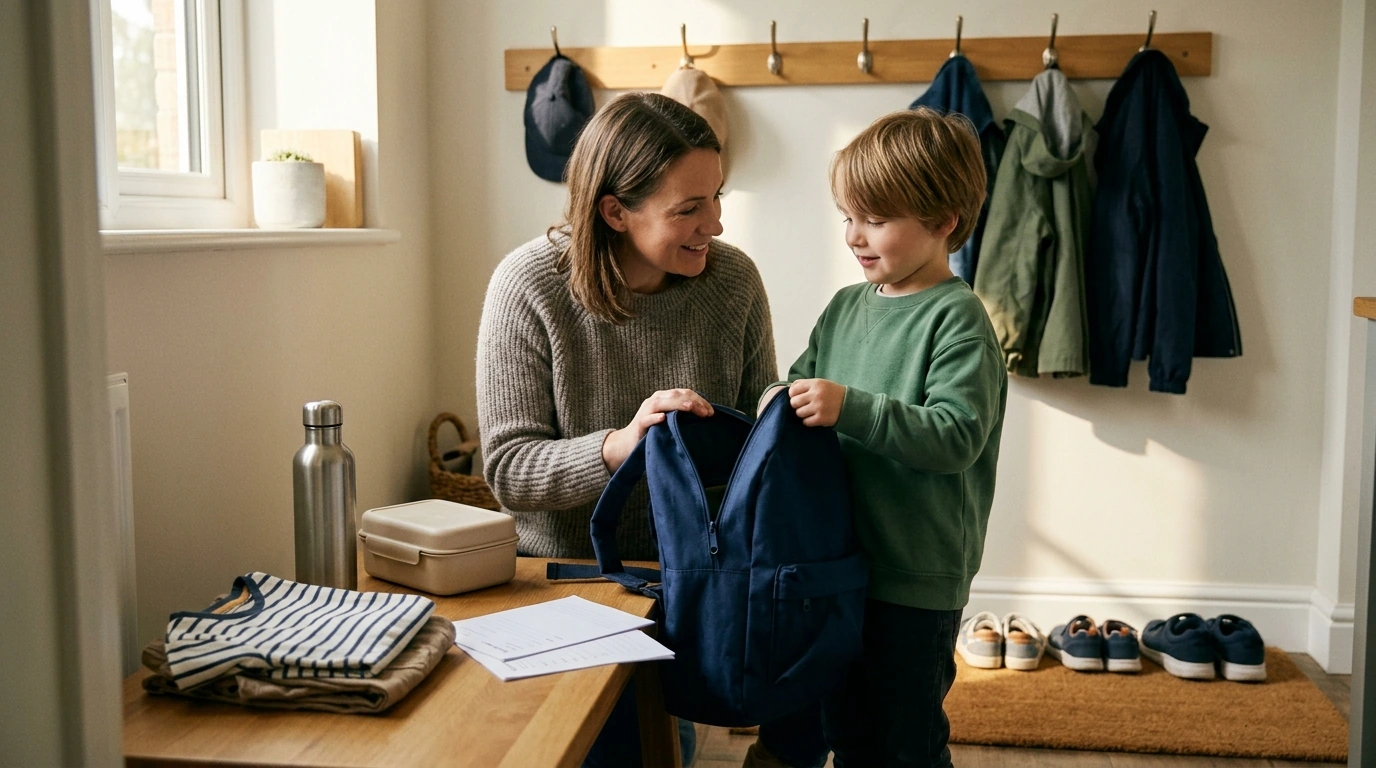
- Night before: pack the bag, stage everything by the door, and use a predictable, calming evening routine.
Back-to-School Countdown Checklist
| When | What to do | Why it helps |
|---|---|---|
| 14–10 days before | Adjust sleep schedule; confirm school dates and forms | Prevents sudden fatigue and last-minute paperwork stress |
| 9–7 days before | Shop supplies; label items; set up a home “launch pad” area | Cuts down morning chaos and lost items |
| 6–4 days before | Practice the route and drop-off; test lunchbox and water bottle routines | Makes the first day feel familiar and predictable |
| 3–1 days before | Pack backpack; plan breakfasts; confirm pick-up plan and after-school care | Reduces decision fatigue and miscommunication |
| Morning of | Follow the same practice routine; allow buffer time | Supports calm transitions and confidence |
Set Up a Morning Routine Your Child Can Follow
Morning success is less about waking up earlier and more about removing decisions. Aim for a routine your child can repeat without constant reminders.
- Keep it visual: a short list or picture chart (wake, bathroom, get dressed, eat, brush teeth, shoes, bag).
- Prep what can be prepped: outfits, breakfast staples, lunch components, and signed forms in the school hub.
- Use a consistent “launch order”: shoes on last, backpack by the door, water bottle clipped or tucked in the same pocket every day.
- Build in a 10-minute buffer so small surprises don’t turn into a full-family sprint.
If you want everything in one place (supplies, routines, first-week reminders), The Ultimate Checklist to Prepare Your Child for School (printable digital download) is an easy way to track steps without sticky-note overload.
Emotional Readiness: Confidence, Separation, and Social Comfort
Kids often look “fine” until the moment it’s time to separate. Planning for feelings—without making them bigger—helps your child stay regulated and helps you stay consistent.
- Name the feelings: excitement and nerves can exist together, and both are normal.
- Practice short goodbyes: a consistent phrase and quick hug help more than lingering or returning for “one more” goodbye.
- Role-play common moments: asking to use the restroom, opening lunch, joining a game, or telling the teacher something feels wrong.
- Plan a “connection ritual” after school (snack + 10 minutes of undivided attention) so your child knows reconnection is guaranteed.
For more guidance on supporting student mental health and transitions, the National Association of School Psychologists offers family-friendly resources.
Health, Safety, and Paperwork That Often Gets Missed
These are the items that tend to slip through the cracks—until a deadline email shows up at 9 p.m.
Lunch, Hydration, and Clothing: Make the Day Feel Easy
A Printable Checklist That Keeps Everything in One Place
For a ready-to-print option, The Ultimate Checklist to Prepare Your Child for School | Back to School Digital Download Guide is a straightforward way to organize the whole runway from “two weeks out” to “morning of.”
Helpful Add-Ons for a Smoother First Week
For cozy after-school decompression, the 70cm Kawaii Animal Plush Pillow for comforting hugs after school is a soft, oversized option that can turn the post-school crash into a calmer reset.
FAQ
How early should back-to-school preparation start?
A 2–3 week runway works well for sleep adjustments and paperwork, with a lighter 1-week plan for supplies and routine practice. Starting earlier mainly reduces last-minute stress and gives your child time to adapt.
What should be packed for the first day of school?
Pack the essentials: backpack, lunch and water (or lunch account info), any required forms, medications if applicable, and a weather layer. Always confirm your school’s rules for tech items, comfort objects, and snacks.
How can parents help with separation anxiety on the first day?
Use a consistent, brief goodbye routine and leave confidently rather than lingering. Practice drop-offs ahead of time, role-play asking the teacher for help, and follow up with a predictable after-school reconnection ritual.















Leave a comment