Calm Anxious Kids Fast: Gentle Tools & Daily Routines
Best Ways to Calm Anxious Children: Gentle Techniques, Mindful Routines, and Practical Coping Strategies
Childhood anxiety can show up as clinginess, irritability, stomachaches, tears, avoidance, or sudden outbursts. Calming support works best when it combines steady connection, simple body-based tools, and predictable routines. The ideas below focus on quick de-escalation in the moment and long-term skills that help children feel safer and more capable over time.
What Anxiety Can Look Like in Children
Anxiety isn’t always obvious worry. Many kids show it through behavior or physical complaints rather than words.
- Common signs include frequent reassurance-seeking, sleep troubles, headaches or stomachaches, perfectionism, meltdowns during transitions, or refusing school and activities.
- Anxiety often hides behind “anger” or “defiance” when a child feels overwhelmed and out of control.
- Notice patterns: time of day, specific places, social situations, performance pressure, or separation from caregivers.
- Track basics first: hunger, fatigue, overstimulation, and illness can intensify anxious behaviors.
For a helpful overview of anxiety disorders and how they can look across ages, see guidance from the American Academy of Pediatrics and the National Institute of Mental Health.
A Quick Calm Plan for the Moment Anxiety Hits
When a child is flooded with worry, the goal is to help their nervous system settle first. Explanations and problem-solving land better after the body calms.
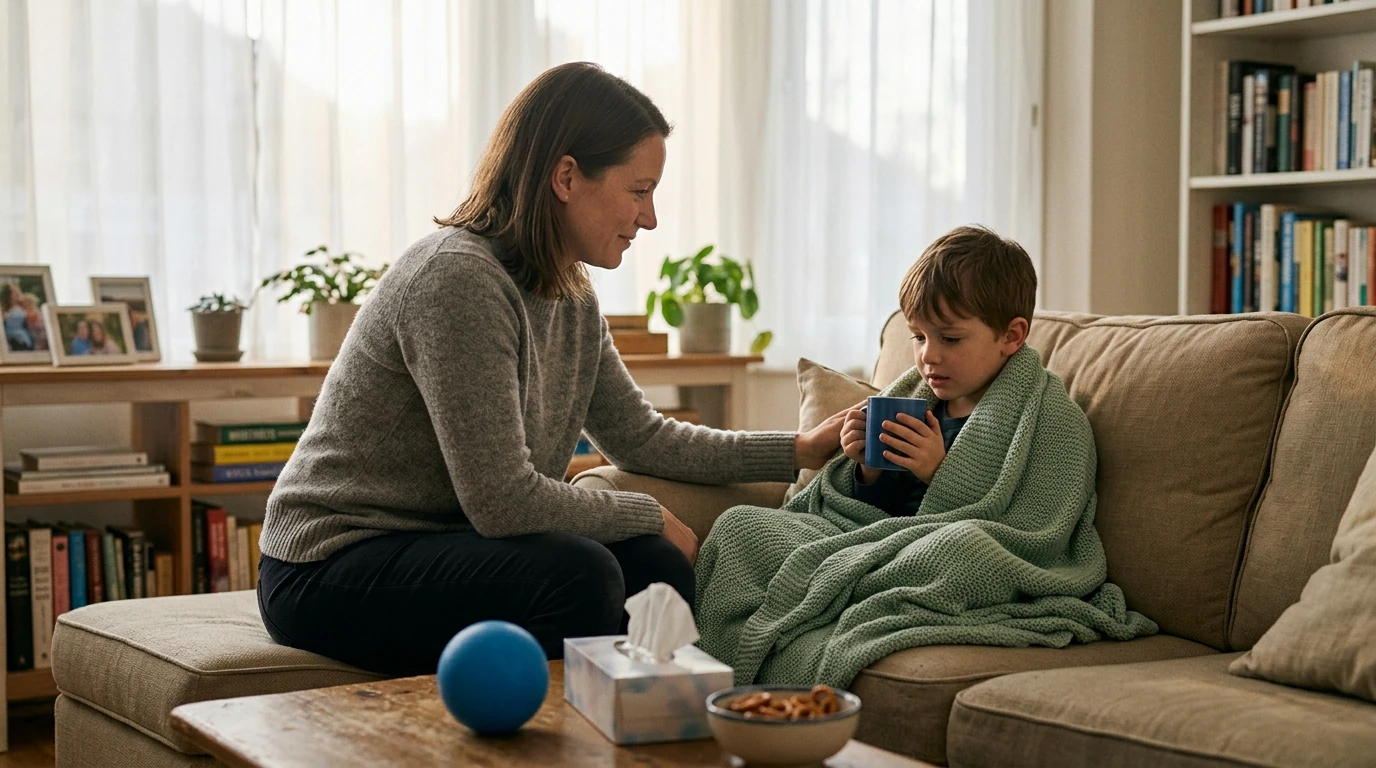
- Start with connection: get to eye level, soften your voice, and offer a brief validating phrase like, “This feels big right now.”
- Reduce input: lower lights, minimize questions, and move to a quieter space when possible.
- Offer two simple choices: small choices restore control (“Do you want the couch or your bed?” “Breathing or a sip of water first?”).
- Use short, concrete steps: one action at a time beats multi-step directions during panic or spiraling worry.
- Co-regulate before problem-solving: your calm presence (steady tone, slower movements) helps their body find safety.
Gentle Body-Based Techniques That Work Fast
Body-based tools work well because anxiety is physical. Try one technique for 60–120 seconds, then reassess instead of cycling through many options at once.
- Breathing games: “smell the flower, blow the candle,” or inhale for 3 and exhale for 4–5 to lengthen the exhale.
- Grounding with senses: name 5 things seen, 4 felt, 3 heard, 2 smelled, 1 tasted (adjust for age).
- Progressive muscle squeeze-and-release: “robot to spaghetti” shifts the body from tension to relaxation.
- Warmth and pressure: a warm drink, a snug blanket, or a firm hug (ask permission) can cue safety.
- Movement breaks: wall push-ups, animal walks, or a short walk can help discharge adrenaline.
Fast Calming Tools by Age and Setting
| Tool | Ages | Best for | How to try it |
|---|---|---|---|
| Balloon breathing | 3–8 | Tears, clinginess, bedtime worries | Hands on belly; slowly “inflate” on inhale, “deflate” on exhale |
| 5-4-3-2-1 grounding | 6–12 | Racing thoughts, public places | Name senses in order; repeat once if needed |
| Robot to spaghetti | 4–10 | Body tension, irritability | Squeeze whole body 5 seconds, then flop and relax |
| Wall push-ups | 5–12 | Restlessness, frustration | 10–20 slow push-ups; pair with steady exhale |
| Worry-to-action step | 8–12 | Rumination, “what if” loops | Name worry; choose one small action or a scheduled “worry time” |
Mindful Routines That Build Calm Over Time
Routines reduce uncertainty, which is often the fuel for anxiety. Small “anchors” throughout the day can lower the baseline stress level.
- Predictable anchors: consistent morning, after-school, and bedtime steps reduce uncertainty.
- Transition buffers: add a 5-minute “arrival routine” after school (snack, water, quiet activity) before demands.
- Daily check-in habit: a 1–10 feelings scale or color chart helps children notice early signs of stress.
- Sleep supports: dim lights, screens off earlier, and a repeating wind-down sequence (wash, pajamas, story, lights out).
- Practice coping skills when calm: brief daily rehearsal makes tools easier to access during anxious moments.
Supportive Words That Calm Without Feeding Reassurance Loops
Repeated reassurance can accidentally train the brain to keep asking for certainty. A steadier approach is: validate, name what’s happening, then pivot to coping.
Practical Coping Strategies for Common Triggers
When to Get Extra Support
More background on children’s mental health is available from the CDC.
A Simple At-Home Toolkit Parents and Caregivers Can Use
If you’d like a step-by-step resource you can reference quickly, see Best Ways to Calm Anxious Children (digital guide).
For kids who respond well to gentle pressure and a comforting “hug” item during wind-down time, consider the 70cm Kawaii Animal Plush Pillow – Soft Seal, Shark & Narwhal Hugging Toy. For families building a soothing routine from the newborn stage, the Newborn Baby Gift Set – Bath Toys, Towels, Rattles & More can support calmer daily care rhythms.
FAQ
How can a child be calmed down quickly during an anxiety spiral?
Start with co-regulation: lower stimulation, validate the feeling briefly, and offer two simple choices. Then use one body-based tool (slow-exhale breathing, grounding, or muscle release) until their breathing and voice soften.
What if a child keeps asking for reassurance over and over?
Validate once and shift to confidence and coping: “I hear the worry—let’s use your calm plan.” Offer a small next step or a scheduled “worry time” so you stay supportive without reinforcing the reassurance loop.
When should a parent seek professional help for childhood anxiety?
Consider professional support when anxiety lasts for weeks and disrupts sleep, school, friendships, eating, or daily routines, or when avoidance and physical symptoms keep escalating. Start with a pediatrician or a licensed child therapist, especially if panic or safety concerns are present.














Leave a comment