5-in-1 Baby Food Maker: Steam, Blend, Sterilize (750ml)
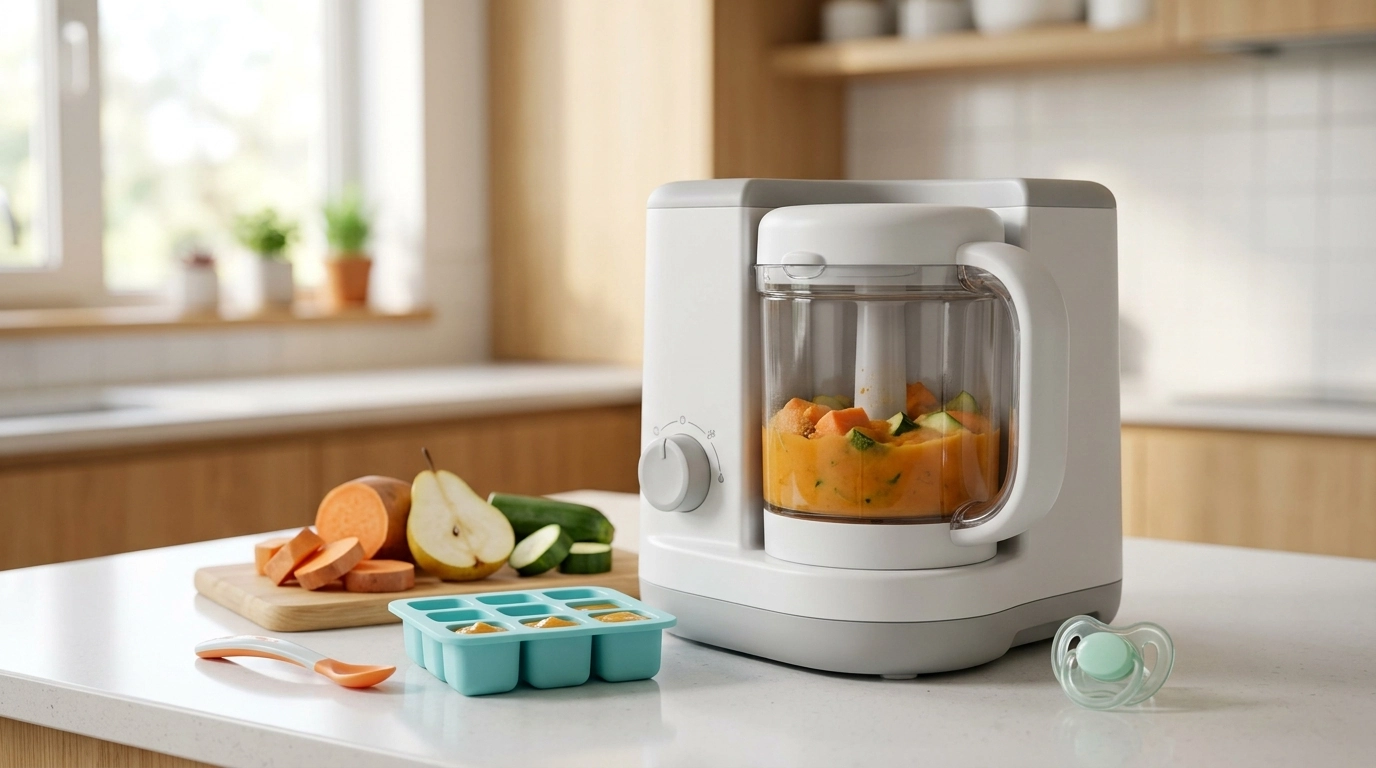
Why a 5-in-1 Baby Food Maker Can Simplify Early Feeding
A multi-function baby food maker can streamline the day-to-day routine of starting solids by combining steaming, blending, reheating/defrosting, and sterilizing in one compact setup. This guide explains what a 5-in-1 steamer blender sterilizer does, how a 750ml Tritan bowl fits real-life portion planning, and how to adjust textures as babies move from smooth purees to thicker, spoonable mashes.
What “5-in-1” Means in a Baby Food Maker
While features vary by model, “5-in-1” typically refers to five common jobs that come up repeatedly during the first year of solids.
Steaming
Steaming cooks fruits, vegetables, and many proteins with moisture, helping ingredients soften evenly so they blend more easily. It’s a simple way to get a tender texture without submerging food in water.
Blending
Blending turns cooked ingredients into purees ranging from silky-smooth to thicker textures depending on blend time and the amount of liquid in the bowl.
Reheating / Warming
Warming brings chilled portions up to a comfortable serving temperature without needing a stovetop. It’s useful for pre-portioned meals stored in the fridge.
Defrosting
Defrosting gently thaws frozen baby food portions, making it easier to rotate through freezer batches without long wait times.
Sterilizing
Sterilizing can help sanitize certain baby accessories (often small items like nipples and pacifiers) as long as they fit safely and both the accessory and appliance instructions allow steam sterilization.
Capacity and Bowl Material: 750ml Tritan in Practical Terms
A 750ml bowl hits a sweet spot for many families: large enough to batch cook several servings, but not so large that it feels cumbersome for everyday meals. It also helps maintain more consistent blending because the blades can circulate ingredients more effectively when there’s enough volume in the bowl.
Tritan is a durable, clear plastic commonly used in food-contact products and valued for impact resistance and clarity. As with any bowl or container, it’s important to follow the manufacturer’s temperature and cleaning guidelines and replace parts that become cracked, warped, or cloudy over time.
For portion planning, a practical routine is to blend a larger batch, refrigerate what will be used soon, and freeze extra portions in small containers or silicone trays. Smaller blends (one quick meal) can still work well, but may require occasional scraping down the sides or adding a small amount of steaming liquid to keep food moving smoothly.
Batch sizes and portion planning with a 750ml bowl
| Batch goal | Approx. volume to prepare | Typical outcome | Storage approach |
|---|---|---|---|
| Single meal | 150–250ml | Fresh puree for immediate serving | Refrigerate leftovers (short term) |
| 2–3 meals | 300–500ml | Multiple portions with consistent texture | Refrigerate and portion |
| Batch cook | 500–750ml | Several servings for the week | Portion and freeze extras |
Getting Started: A Simple Steam-Then-Blend Workflow
Most recipes follow the same repeatable rhythm: prep, steam, blend, then portion.
1) Prep ingredients for even cooking
Wash produce, peel when needed, remove pits/seeds, and cut into uniform small pieces so everything steams at the same pace. Even sizing matters more than perfect shapes.
2) Add water as directed
Fill the reservoir with the recommended amount so the unit can complete its cycle without running dry. If you’re experimenting with new foods, start with the standard water level and adjust later.
3) Steam first
Start with softer options (pear, zucchini, sweet potato) before moving to denser ingredients or multi-item blends. Steaming thoroughly reduces the need to over-blend.
4) Blend second
Begin with shorter blend times and increase gradually. This makes it easier to stop at the texture you want instead of blending past it.
5) Adjust consistency without guessing
6) Cool, portion, and label
Let food cool before sealing containers. Label portions with the contents and date so older servings get used first. For general food-safety practices around cooling and storage, refer to the CDC’s food safety guidance for families.
Textures by Stage: Smooth Purees to Soft Mash
Texture progression doesn’t have to be rushed, but it does benefit from intentional steps that match a baby’s readiness and pediatric guidance. The American Academy of Pediatrics resource on starting solid foods is a helpful reference for timing and general feeding milestones.
Early purees
Thicker purees
Soft mash and gentle lumps
Better blending with smart pairing
Sterilizing and Cleaning: Keeping the System Food-Safe
Everyday Recipe Ideas That Work Well in a Steam-Blend Setup
For storage-time references tailored to refrigeration vs. freezing, the USDA FoodKeeper app is a useful tool.
When a Baby Food Maker Is Worth It (and When It Isn’t)
Recommended Picks (In Stock)
- 5-in-1 Baby Food Maker with Steamer, Blender & Sterilizer – 750ml Tritan Bowl ($75.97)
- Newborn Baby Gift Set – Bath Toys, Towels, Rattles & More ($21.67)
FAQ
Is a Tritan bowl safe for making baby food?
Tritan is a commonly used food-contact plastic, and it’s widely chosen for durability and clarity. Follow the manufacturer’s temperature limits and care instructions, avoid abrasive cleaning that can scratch surfaces, and replace the bowl if it becomes cracked, warped, or heavily clouded.
How long can homemade baby food be stored after steaming and blending?
Homemade baby food is typically stored short-term in the refrigerator and longer-term in the freezer, using clean, sealed containers and clear date labels. Cool food quickly, keep storage temperatures consistent, and check trusted food-safety references for storage-time guidance.
Can the sterilizer function be used for bottle parts and pacifiers?
Yes, as long as the items are approved for steam sterilization and fit safely in the unit without blocking vents or touching hot surfaces. Confirm both the accessory instructions and the appliance manual, and allow items to dry fully after the cycle to keep them sanitary.















Leave a comment