CFM Vacuum Pump Guide: Sizing Tips & 3.5 CFM Uses
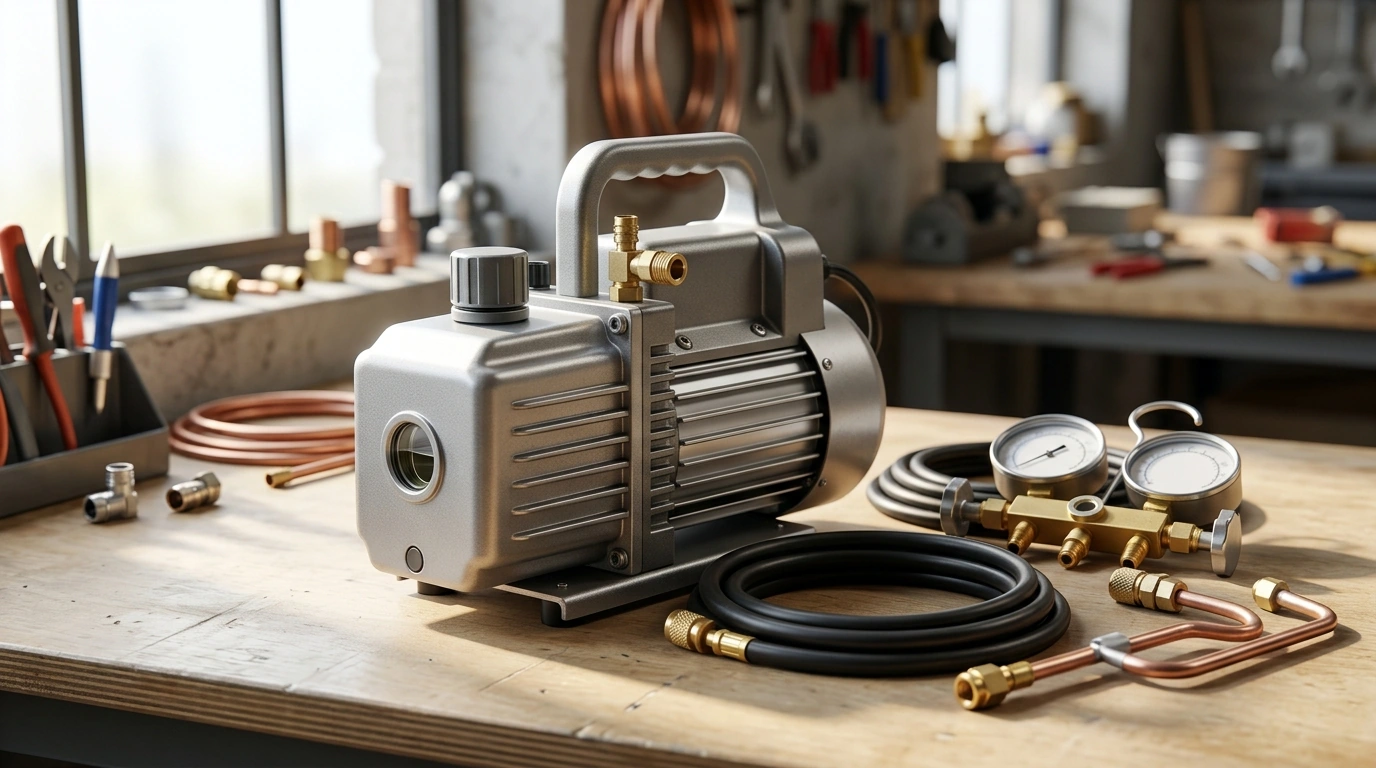
CFM Vacuum Pump Basics: Sizing, Use Cases, and What a 3.5 CFM Unit Can Handle
A CFM vacuum pump is chosen by matching pump capacity (flow rate), target vacuum level, and the size of the system being evacuated. The right match shortens evacuation time, improves moisture removal, and helps protect tools and equipment during servicing tasks like HVAC work, resin degassing, or vacuum packaging.
What “CFM” Means on a Vacuum Pump
CFM (cubic feet per minute) describes a vacuum pump’s flow rate—how much air it can move in a minute under specific conditions. In practical terms, CFM mostly influences how quickly a system can be pulled down from atmospheric pressure toward a deep vacuum.
Higher CFM generally reduces evacuation time, especially when you’re working with larger internal volumes, longer hoses, or high-flow service setups (larger manifolds, larger fittings). That said, CFM is not the same thing as ultimate vacuum (how “deep” the vacuum can get). For moisture removal and high-quality evacuation, both flow rate and achievable vacuum level matter.
Common Jobs a CFM Vacuum Pump Is Used For
CFM-rated vacuum pumps show up in a range of shop and service applications because they’re straightforward tools: connect, evacuate, verify, and isolate.
- HVAC/refrigeration evacuation: removes air and moisture before charging refrigerant; critical for system efficiency and compressor longevity.
- Automotive A/C service: evacuates lines and components after repairs, leak fixes, or component replacement.
- Resin and silicone degassing: helps pull entrained air out of casting materials to reduce bubbles, voids, and surface defects.
- Vacuum chambers and packaging: supports container pull-down for stabilization or sealing operations, depending on the equipment setup and the bag/chamber system used.
Industry guidance for evacuation and dehydration concepts is often covered in technical references like the ASHRAE Handbook, while fundamental measurement concepts (pressure, vacuum units) are aligned with resources such as NIST.
How to Choose the Right CFM for Your System
Choosing the “right” CFM is less about chasing the biggest number and more about avoiding slowdowns that come from volume and restrictions.
- Start with system volume: larger vessels, longer line sets, and bigger manifolds benefit from higher CFM to reduce pump-down time.
- Account for restrictions: small-diameter hoses, valve cores, and narrow fittings can bottleneck performance more than the pump rating suggests. A strong pump can still feel slow if the flow path is choked down.
- Match the job’s goal: deep vacuum work (especially moisture removal in HVAC) demands good ultimate vacuum performance and a reliable micron gauge—not only a higher CFM label.
- Plan for real workflow: if multiple units are serviced daily, higher CFM can improve throughput; occasional use may prioritize cost, storage space, and portability.
Practical CFM Selection Guide (Typical Use Cases)
| System/Task Size | What to Expect | Suggested CFM Range |
|---|---|---|
| Small volumes (tight systems, short hoses) | Quicker pull-down; less sensitivity to flow rate | 1.5–3.5 CFM |
| Medium volumes (typical service work, moderate hose length) | Balanced evacuation time and portability | 3.5–6 CFM |
| Large volumes (bigger systems, longer line sets, frequent service) | Flow rate matters most; restrictions become more noticeable | 6–10+ CFM |
Spotlight: 3.5 CFM Vacuum Pump—Where It Fits Best
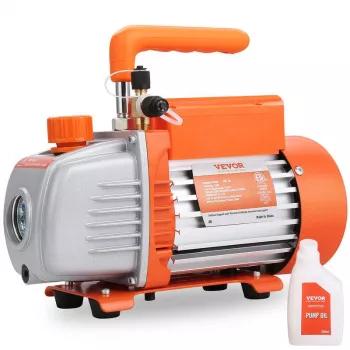
A 3.5 CFM unit lands in a practical middle ground: capable enough for a lot of routine evacuation work, without the size and cost bump that comes with higher-flow models. It typically suits day-to-day needs where portability and price matter as much as speed.
- Best fit scenarios: routine HVAC and automotive A/C evacuation, smaller chambers, and general workshop tasks that don’t require oversized flow.
- When to size up: very large systems, frequent back-to-back jobs, or setups with long hoses and high-flow accessories where evacuation time becomes a bottleneck.
- What to verify before purchase: compatibility with intended fittings/hoses, oil type and change intervals, and whether a micron gauge will be used to verify evacuation quality.
If you’re looking for a mid-range option for common service tasks, see the 3.5 CFM Vacuum Pump.
Setup Tips That Improve Results More Than CFM Alone
Two setups with the same pump can perform very differently. Often, the difference isn’t the pump—it’s the flow path, measurement method, and oil condition.
Care, Storage, and Safety Notes
- Change oil on schedule: fresh oil improves vacuum depth and protects internal components, especially after “dirty” or moisture-heavy jobs.
- Cap ports and store clean: keeping dust and humidity out of the pump body and reservoir prevents contamination between jobs.
- Ventilate and follow regulations: refrigerant handling can be hazardous and is regulated in many contexts. For U.S. requirements and certification, reference the U.S. EPA Section 608 guidance.
- Use appropriate PPE: especially during refrigerant recovery/charging and when working near moving equipment.
Shop In-Stock Picks
- 3.5 CFM Vacuum Pump — a practical choice for many routine evacuation jobs.
- VVS Moissanite Long Tassel Drop Earrings — a gift-ready accessory option.
FAQ
Is a higher CFM vacuum pump always better?
Not always. Higher CFM can reduce evacuation time, but restrictions (hoses, valve cores, fittings), ultimate vacuum capability, oil condition, and using a micron gauge often matter just as much for real-world results.
What’s the difference between CFM and micron rating?
CFM is flow rate (how fast the pump can move air), while microns measure vacuum depth/quality. For HVAC moisture removal, measuring microns and performing a vacuum hold/decay test is essential.
Can a 3.5 CFM vacuum pump handle automotive A/C evacuation?
Yes—3.5 CFM is suitable for many common automotive A/C evacuation tasks. Proper procedure (recovery equipment, correct fittings, and a vacuum hold test) is critical, and local regulations may apply.













Leave a comment