AI Bilingual Routine for Kids: Weekly Plan & Activities
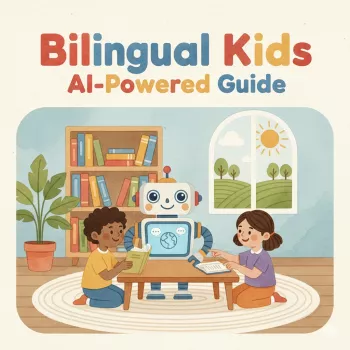
Bilingual Kids: An AI-Powered Home Guide for Building Two Languages with Confidence
Raising bilingual kids at home can feel like juggling routines, motivation, and consistency—especially when parents aren’t fluent in the target language. An AI-assisted approach can make practice more regular and more fun by generating stories, conversation games, listening practice, and simple plans that fit a family’s schedule. With a few dependable habits and a low-pressure plan, progress becomes something you can see and repeat—without turning your home into a classroom.
What bilingual learning at home needs to work
Most at-home bilingual success comes down to predictable exposure and meaningful use. Kids learn languages best when they need the language to do something real: choose, play, negotiate, and connect.
- Clear family language goals: decide which language(s) happen at home, when, and with whom.
- Predictable exposure: short daily touchpoints often beat occasional long sessions.
- Meaningful use: tie the language to real needs (choices, play, routines).
- A mix of input and output: stories and listening plus speaking and writing at a level the child can manage.
- Low-pressure repetition: repeat phrases through games, songs, and bedtime routines.
- A plan for consistency: simple tracking so parents can adjust without overhauling everything.
If you’re unsure what “normal” looks like, organizations like the American Speech-Language-Hearing Association (ASHA) share helpful, research-based perspectives on bilingualism and language development.
How AI can support bilingual development (without replacing human interaction)
AI works best as a flexible assistant: it creates materials quickly, adapts difficulty, and helps adults keep conversations going. The goal isn’t perfect grammar on day one—it’s more opportunities to understand and be understood.
- Personalized content on demand: short stories, dialogues, role-play scenarios, and vocabulary lists matched to a child’s interests (dinosaurs, soccer, space, baking).
- Conversation scaffolding: suggested prompts and follow-up questions that keep kids talking longer instead of answering with one word.
- Pronunciation and listening practice: simple, level-appropriate sentences and minimal pairs to practice tricky sounds.
- Adaptive difficulty: quick adjustments (shorter sentences, more repetition, simpler structures) when a child struggles.
- Variety to prevent boredom: rotate themes while recycling core phrases (requests, feelings, routines).
- Parent support: plain-language grammar explanations and gentle correction ideas (recasting, modeling, “try it this way”).
For screen-time balance, family media guidance from the American Academy of Pediatrics can help you keep AI use intentional and age-appropriate.
A simple weekly routine that fits real family life
A routine works when it’s light enough to do on busy days and structured enough that you don’t have to “think up” activities every time. Aim for one daily micro-session plus a few slightly longer moments each week.
- Daily micro-sessions (5–15 minutes): attach to one routine anchor (breakfast chat, car ride talk, bedtime story).
- Three themed days per week: pick a theme (food, school, feelings) and reuse it across games and reading.
- One family project per week: cook a recipe, build a craft, or plan a pretend trip using the target language.
- One “output moment” per day: retell a short story, explain a drawing, or do mini “show and tell.”
- One review day per week: replay favorites, recap phrases, celebrate effort over perfection.
Example plan: AI-assisted bilingual practice (adjust by age)
| Day | 5–10 minutes (routine) | 10–20 minutes (activity) | Quick win (check) |
|---|---|---|---|
| Mon | Routine chat: choices (food/clothes) | AI story + 3 comprehension questions | Child answers with 2 full sentences |
| Tue | Car/Walk: “I spy” vocabulary | Role-play: store or restaurant dialogue | Uses 5 target words |
| Wed | Bedtime: feelings check-in | Picture description game (AI-generated prompts) | Adds 1 new connector (and/because) |
| Thu | Morning: calendar + weather | Song/chant + repeat key phrases | Sings or repeats without prompting |
| Fri | Snack time: requests and manners | Mini “show and tell” about a toy | Asks 1 question in target language |
| Sat | Family outing language scavenger hunt | Project: cook/craft with labeled steps | Uses language to solve a real task |
| Sun | Review: favorite phrases recap | Game day: charades/taboo with vocabulary | Parent notes 1 strength + 1 next focus |
Activities that keep kids talking (and how AI helps)
The best activities create a reason to speak. When kids feel in control—choosing characters, changing outcomes, giving directions—they naturally produce more language.
Checklists that make progress visible
Healthy boundaries for AI use with kids
For a big-picture view of multilingual learning and education, UNESCO’s education resources provide useful context on multilingualism and learning environments.
Digital download guide: what’s included and who it’s for
Recommended picks for an at-home bilingual routine
- Bilingual Kids – AI-Powered Guide (Digital Download) for structured weekly plans, checklists, and activity starters.
- 70cm Kawaii Animal Plush Pillow – Soft Seal, Shark & Narwhal Hugging Toy as a role-play “character” for dialogues, feelings scripts, and bedtime storytelling.
- Newborn Baby Gift Set – Bath Toys, Towels, Rattles & More to build early-language routines through naming, requesting, and simple bath-time songs.
FAQ
What age is this approach best for?
It works well from preschool through elementary. For younger kids, focus on short phrases, songs, pictures, and routine language; for older kids, expand into role-plays, simple journaling, and weekly projects with more detailed speaking.
Do parents need to be fluent in the second language?
No—parents can facilitate with prepared phrases, quick translations, and AI-generated scripts that guide the routine. Consistency, warmth, and creating chances to use the language matter more than speaking perfectly.
How much daily practice is enough to see progress?
Regular 5–15 minute daily touchpoints plus a few longer sessions each week are often enough to build momentum. Meaningful use during real routines tends to outperform long drill-style practice.














Leave a comment