Compact Indoor Charcoal Grill & Heating Oven (Brass)
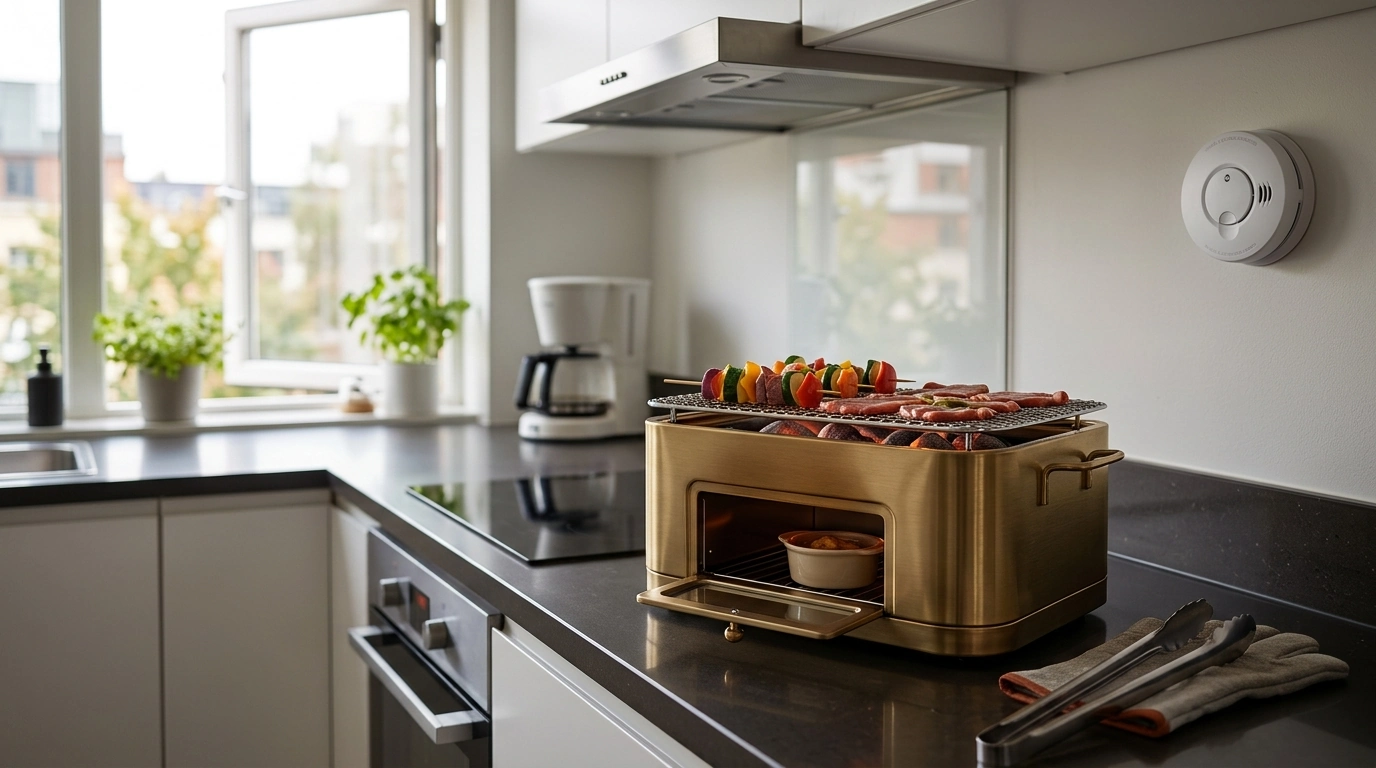
Indoor Charcoal Grill & Heating Oven – Compact Brass Finish with Enhanced Safety
A compact indoor charcoal grill that also functions as a heating oven brings the unmistakable aroma of charcoal cooking into a small-footprint setup designed for countertop or tabletop use. With a warm brass-finish exterior, it can look as intentional as it is practical—while still demanding thoughtful indoor safety habits. Below is a clear guide to what this style of unit is built to do, how to run it more responsibly indoors, and how to get steady grilling heat plus gentle warming performance.
What This Indoor Charcoal Grill & Heating Oven Is Made For
This type of unit is all about dual-purpose cooking in tight spaces. It’s designed to deliver direct charcoal heat for grilling, then provide a more enclosed heating/oven-style area that helps keep foods warm without rushing them over high flame.
- Two functions in one: charcoal grilling plus a warming/holding area to maintain serving temperature.
- Compact footprint: suited to apartments, small kitchens, and tabletop meals where outdoor grilling isn’t available.
- Brass-finish exterior: decorative enough to leave out, and typically easier to wipe down than porous finishes.
- Small-batch strength: best for skewers, thin cuts, vegetables, and quick-searing foods that benefit from charcoal aroma.
Key Safety Features and Why They Matter Indoors
Indoor charcoal cooking requires extra care because charcoal combustion creates smoke and potentially dangerous gases. Even when a unit is designed with better heat containment and controlled airflow, it still relies on proper placement, ventilation, and attentive operation.
- Heat management: a contained burn area and adjustable airflow can help smooth out temperature swings and reduce flare-ups compared with fully open charcoal setups.
- Stable placement: always set it on a level, heat-resistant surface with open space around the unit to avoid accidental contact.
- Handling hot parts: treat the entire body as hot during and after cooking; plan heatproof gloves and dedicated utensils.
- Smoke & carbon monoxide awareness: indoor operation demands active ventilation and working alarms. For background on carbon monoxide risks, see the U.S. EPA guidance and the CDC prevention tips.
Indoor Safety Checklist (Before Every Use)
| Checkpoint | What to do | Why it matters |
|---|---|---|
| Ventilation | Open windows and use an exhaust fan if available | Reduces smoke buildup and combustion byproducts |
| CO alarm | Confirm a working carbon monoxide alarm nearby | Early warning for dangerous CO levels |
| Clearance | Keep curtains, paper, and aerosols away; allow open space around the unit | Prevents ignition and heat damage |
| Surface | Place on a heat-proof mat or nonflammable surface | Protects counters/tables from scorching |
| Extinguishing plan | Have a metal lid or safe method to smother coals; keep a Class ABC fire extinguisher accessible | Faster response if something overheats or spills |
General grilling safety recommendations from the NFPA are also helpful to review, especially around clearance, supervision, and fire response basics.
How to Set Up for Clean Heat and Better Flavor
Cleaner indoor grilling starts with the fuel choice and a slower, steadier warm-up. The goal is to let charcoal settle into an even burn before food hits the grate, minimizing harsh smoke and helping food pick up the pleasant, toasted aroma charcoal is known for.
- Choose the right charcoal: use clean-burning charcoal intended for cooking; avoid treated fuels or anything not labeled for food use.
- Start small: begin with a modest amount of charcoal and add only if needed to avoid overheating and unnecessary smoke.
- Preheat patiently: wait for the coals to reach a stable stage before cooking; it improves searing and reduces acrid smoke.
- Manage airflow gradually: small vent adjustments help prevent sudden heat spikes and smoke surges.
- Control drips: excess marinades and sugary sauces can drip onto coals and flare; pat foods drier or apply glazes late.
Cooking Performance: Grilling vs. Heating-Oven Use
The biggest advantage of a combined grill-and-heating design is workflow. You can sear and finish foods in rounds while keeping earlier batches warm—more like a compact charcoal station than a single “all at once” cooker.
- Grilling mode: best for quick-cook foods such as thin steaks, sliced vegetables, skewers, shrimp, and fish fillets.
- Heating/oven function: shines for gentle warming—holding grilled items at serving temperature, warming bread, or keeping side dishes from cooling too fast.
- Batch strategy: grill first, then transfer finished pieces to the warming area while the next round cooks.
- Moisture control: tent foods lightly when warming to reduce drying, and watch for carryover cooking in thinner cuts.
For consistent results, keep portions small and uniform. When everything is cut to a similar thickness, the grill heats more predictably and the warming compartment can do its job without overcooking edges.
Care, Cleaning, and Brass-Finish Upkeep
Who This Compact Indoor Charcoal Setup Fits Best
Product Page and Purchase Details
For current pricing, what’s included, and the latest availability, see the product page for the Indoor Charcoal Grill & Heating Oven – Compact, Brass Finish, Safety Enhanced. Before ordering, confirm where you’ll place it (heat-proof surface, safe clearances) and how you’ll ventilate the room during use.
More in-stock finds
- VVS Moissanite Long Tassel Drop Earrings
- 70cm Kawaii Animal Plush Pillow – Soft Seal, Shark & Narwhal Hugging Toy
FAQ
Can a charcoal grill be used safely indoors?
Charcoal combustion can produce carbon monoxide and smoke, so indoor use requires strong ventilation, a working CO alarm, safe clearances from combustibles, and careful heat control. Always follow the manufacturer’s instructions and local safety guidance.
How can smoke be reduced when grilling with charcoal indoors?
Use clean cooking charcoal, avoid lighter fluids, and preheat until the coals are stable before cooking. Keep drips minimal, adjust airflow gradually, and maintain active ventilation (open window and an exhaust fan if available).
How should ash and leftover coals be disposed of?
Let coals and ash cool completely, then transfer them to a lidded metal container stored away from combustible materials. Never dump warm ash into indoor trash cans or plastic bins.














Leave a comment