AI Luxury Room Concepts: Prompts, Lighting & Materials
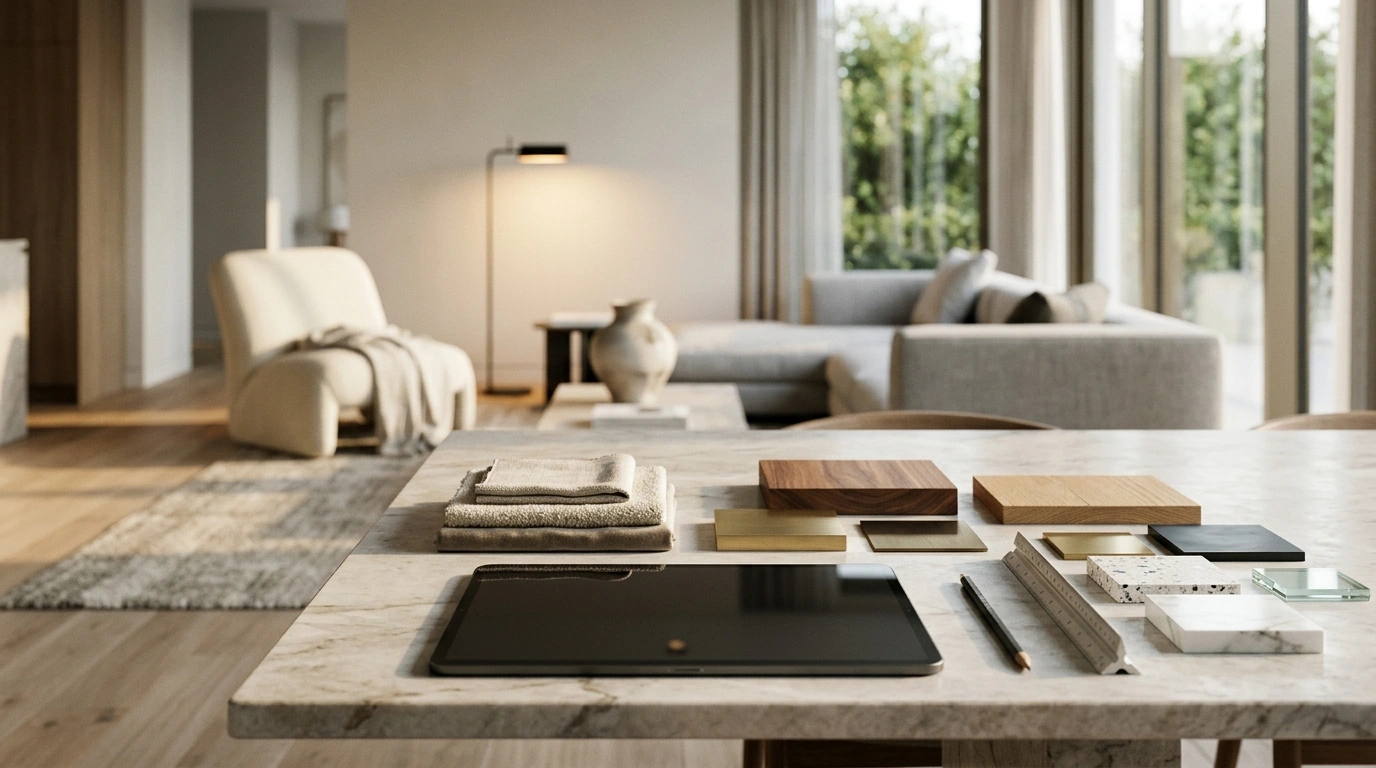
Luxury Room Concepts with AI: A Faster Path to Polished Design Directions
Luxury interiors are often defined by proportion, restraint, material quality, and lighting—not just expensive objects. A strong concept starts with a clear point of view, then repeats the right details consistently: the same metal tone across fixtures, the same level of sheen on surfaces, and the same “temperature” of light after sunset. For more guidance, see 25 ChatGPT Interior Design Prompts to Remodel Home ….
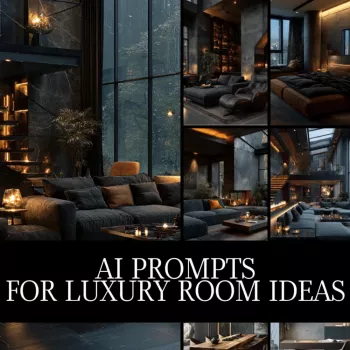
The AI Prompts for Luxury Room Ideas digital download guide is built around that reality. It provides ready-to-use text frameworks and a repeatable workflow for generating high-end room concepts with Midjourney and ChatGPT—so early exploration moves faster while staying aligned with real-world design principles. For further reading, see 25+ AI Prompts to Design Beautiful Spaces in Minutes.
What “Luxury” Looks Like in a Room (Beyond the Price Tag)
Luxury reads as intentional. Even a simple room can feel elevated when the visual hierarchy is clear and the finishes feel considered.
- Clear hierarchy: one primary focal point supported by secondary moments (art, fireplace, statement lighting).
- Intentional material palette: stone, wood, metal, glass, and textile choices that feel cohesive and tactile.
- Layered lighting: ambient + task + accent lighting to create depth and evening atmosphere.
- Proportion and negative space: fewer pieces, better scaled, with breathing room around silhouettes.
For lighting planning standards and professional cues, the International Association of Lighting Designers is a helpful reference: https://iald.org/.
What’s Included in the Digital Download
The guide is designed for people who want refined concepts without losing time rewriting inputs or starting from scratch each time.
- Curated text frameworks for luxury living rooms, bedrooms, kitchens, baths, dining rooms, and entryways.
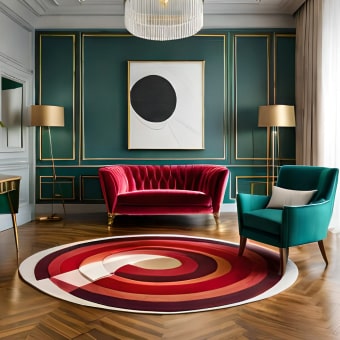
- Style directions spanning modern, classic, transitional, art deco, and resort-inspired aesthetics.
- Guidance for iterating: how to refine layout, materials, color temperature, and lighting mood across versions.
- Use with Midjourney for visuals and ChatGPT for concept narratives, material lists, and styling plans.
Tool references: Midjourney Documentation and the OpenAI Help Center.
A Simple Workflow: From Concept to a Strong Design Direction
A luxury concept becomes useful when it can survive reality: existing windows, clearances, durable finishes, and the way people actually move through the space.
- Define the room brief: dimensions, ceiling height, windows, constraints, and must-keep pieces (like a sofa, dining table, or range).
- Choose a luxury lane: quiet minimal, tailored classic, bold glam, coastal resort, or moody boutique.
- Generate variations with control: change one variable at a time (palette, materials, lighting, camera angle) to learn what’s doing the “work.”
- Convert the winner into an actionable plan: finishes, furniture silhouettes, lighting types, and styling details.
- Validate realism: circulation paths, door swings, seating clearances, and whether materials make sense for wear and moisture.
This keeps the output from becoming pretty-but-impossible. It also helps create continuity across rooms, where luxury is often felt most strongly.
Luxury Room Building Blocks You Can Specify in AI Inputs
Great concepts are built from repeatable components: architectural cues, a disciplined palette, and lighting that makes surfaces look expensive.
- Architecture cues: wall paneling, arches, niches, coffered ceilings, baseboard profiles, and door styles.
- Materials: Calacatta-style marble, travertine, walnut, oak, brushed brass, blackened steel, lacquer, bouclé, velvet, linen.
- Lighting: sculptural chandeliers, cove lighting, picture lights, toe-kick glow, and warm color temperature for evening scenes.
- Styling: oversized art, tonal ceramics, curated books, minimal clutter, and high-contrast textures.
- Camera and mood: natural daylight vs. evening ambience, wide angle vs. vignette detail shots, editorial vs. lived-in.
Room concept variables to mix-and-match
| Room | Signature materials | Lighting mood | Defining detail |
|---|---|---|---|
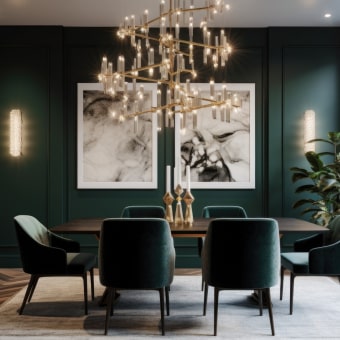
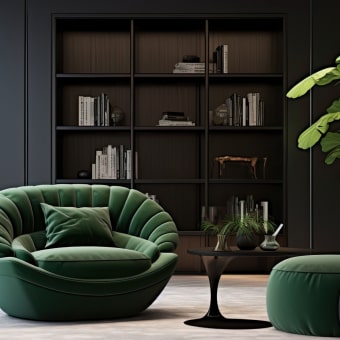
| Living room | Walnut + stone + linen | Warm layered evening | Statement chandelier + oversized art |
| Bedroom | Upholstered panels + wool + brass | Soft indirect glow | Hotel-style headboard wall |
| Kitchen | Marble/stone slab + oak | Bright task + subtle accents | Full-height backsplash + minimal hardware |
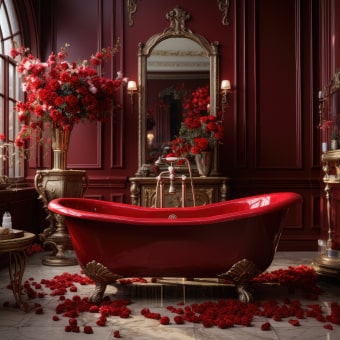
| Bathroom | Travertine + glass + metal | Spa-like diffuse light | Floating vanity + integrated lighting |
| Dining room | Wood + lacquer + metal | Dramatic focal pendant | Monochrome palette with texture |
| Entryway | Stone + mirror + sculptural console | Gallery-like accenting | Architectural wall treatment |
How to Get More Realistic, Usable Results
Realism comes from specificity. The best outputs usually read “designed” because the constraints force better decisions.
Who This Guide Fits Best
Recommended Picks (In Stock)
- AI Prompts for Luxury Room Ideas | Digital Download Guide for Interior Design, Midjourney & ChatGPT Prompts, Luxury Home Decor Inspiration — a structured way to generate cohesive high-end directions and convert them into practical finish and styling plans.
- 70cm Kawaii Animal Plush Pillow – Soft Seal, Shark & Narwhal Hugging Toy — a cozy, overscale soft piece that can help test how “softness” and comfort read in a bedroom or lounge concept.
- VVS Moissanite Long Tassel Drop Earrings — a polished accessory option for client meetings, open houses, or reveal-day photos where a refined overall presentation matters.
Digital Download Checklist: Before You Start Generating Concepts
FAQ
Will this work for both Midjourney and ChatGPT?
Yes. Use Midjourney to generate the visual concepts, then use ChatGPT to turn the winning look into clear narratives, material/finish direction, and room-by-room spec-style checklists with simple wording adjustments for each tool.
Can the results match a specific style like modern classic or quiet luxury?
Yes—lock in the style by specifying architectural cues, a limited material palette, consistent metal finishes, and a defined lighting mood. Consistency improves when you iterate one variable at a time rather than changing everything at once.
Is this suitable for a full-home concept, not just one room?
It works well for whole-home continuity by repeating a “house language” across rooms: the same core materials, the same metal tone, similar lighting color temperature, and a consistent camera/mood approach for visuals.









Leave a comment